Mold and Health: What the Evidence Supports, and When to Worry
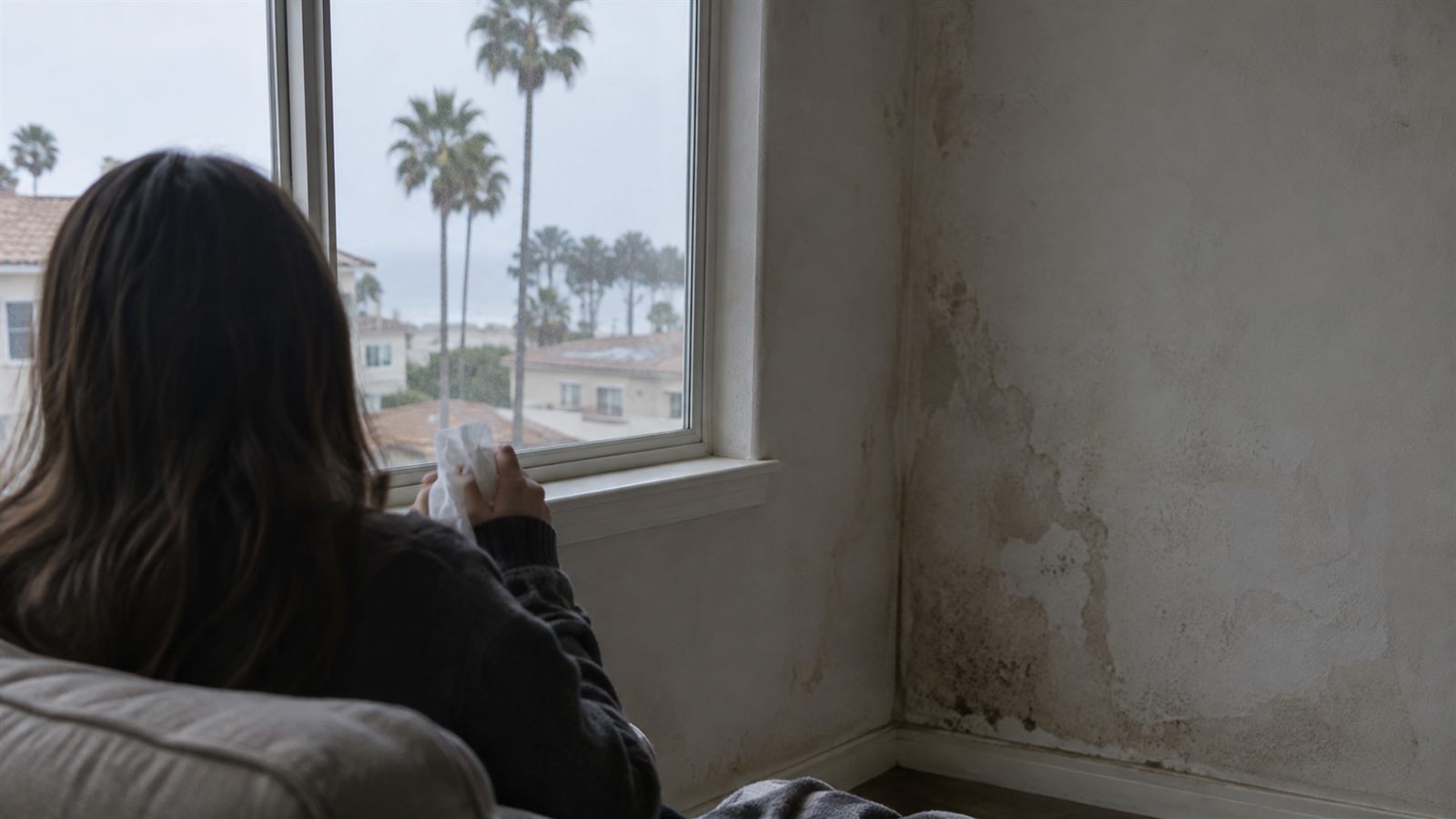
There is a lot of fear marketing in this industry. Here is what the public health literature actually supports, stated plainly — which is enough reason to fix a damp building without exaggerating anything.
Quick answer
What mold health symptoms is exposure actually associated with? Dampness and indoor mold are associated with upper and lower respiratory symptoms, cough, wheeze, worsening of existing asthma, asthma development in children, and allergic and hypersensitivity reactions including rhinitis. Higher-risk groups are infants and young children, elderly people, anyone with asthma or chronic respiratory disease, people with fungal allergies, and immunocompromised individuals, for whom certain fungal exposures carry real infection risk.
What the evidence supports
Major public health reviews, and the guidance that California and federal agencies base their positions on, consistently associate indoor dampness and mold with:
- Upper respiratory symptoms — nasal congestion, runny nose, sinus irritation, throat irritation.
- Lower respiratory symptoms — cough and wheeze.
- Worsening of existing asthma, including more frequent and more severe symptoms.
- Asthma development in children exposed to damp housing.
- Allergic rhinitis and hypersensitivity reactions in sensitised individuals.
- In immunocompromised people, genuine risk of fungal infection from certain organisms.
Notably, the association is with dampness as much as with visible mold. That is why the California Department of Public Health's position is that dampness and mold should be corrected regardless of which species is present — a damp building is the exposure.
Who is at higher risk
- Infants and young children. Developing airways, more time at floor level, and the association with asthma development.
- Elderly people. Reduced respiratory reserve and more frequent underlying conditions.
- People with asthma or COPD. The most clearly supported association in the literature is exacerbation of existing disease.
- People with known fungal allergy.
- Immunocompromised individuals — transplant recipients, people on immunosuppressive therapy, people undergoing chemotherapy, advanced HIV. For this group, certain fungi present an infection risk, not just an irritant one. If someone in the household is in this category, treat visible indoor mold as urgent and talk to their physician.
What the evidence does not support
We think being straight about this is more useful than scaring you.
- There is no well-established, diagnosable “toxic mold syndrome” recognised across mainstream medicine from ordinary residential mold exposure.
- Claims that household black mold causes memory loss, cognitive decline or neurological disease in otherwise healthy adults are not supported by the weight of evidence.
- Acute idiopathic pulmonary haemorrhage in infants was historically linked to Stachybotrys in a widely reported cluster; subsequent review did not establish that causal link.
- A spore count does not predict whether a given individual will become ill. There is no numeric threshold that does.
- No blood or urine test currently establishes that a person's symptoms were caused by mold in a particular building.
None of this means a damp mouldy building is acceptable. It means the honest case for fixing it rests on respiratory symptoms, asthma and building damage — which is plenty.
The pattern that points at your building
Symptoms alone cannot tell you whether a building is the cause, because mold symptoms overlap almost entirely with seasonal allergies, dust mites, pets and ordinary respiratory infections. What distinguishes a building cause is the pattern:
- Worse at home, better within a few days of being away, worse again on return.
- Worse on waking than during the day.
- Worse in one specific room.
- Worse when the heating or air conditioning runs — which points at the duct system or at a source the system is distributing.
- More than one household member affected in the same way.
- Started after a known water event, a remodel, a re-roof or a season change.
If two or more of those apply, investigate the building. That is a measurement problem with a clear method, and it is separate from the medical question.
Two different problems, two different experts
Take symptoms to a physician. They can assess, test for fungal allergy if appropriate, manage asthma and rule out other causes. Do not expect a remediation contractor to diagnose anyone, and be sceptical of any company that offers to.
Take the building to a moisture and mold inspection. Humidity logged over days, moisture mapping, ventilation assessment, HVAC and duct assessment, and sampling where it is warranted. That answers whether there is a source and where it is.
The two investigations inform each other but neither substitutes for the other. See indoor air quality testing.
The order of operations: measure the building before you test the air
If anyone is acutely unwell, that is a medical question first. A building assessment is not a diagnosis, and no remediation company should offer one.
Then measure the building. A $15 hygrometer in the affected room for a week tells you whether sustained relative humidity is above 60%. A $40 moisture meter tells you whether a suspected wall is wet. Those two readings separate a humidity problem from a leak, and they cost less than a single air sample.
Then look for the source, not the spores. An inspection that finds the water decides the scope of work. Air sampling with no control, taken before anyone has found a source, usually does not.
If it is a rental, document in writing. California Civil Code 1941.1 and Health and Safety Code 17920.3 put dampness and visible mold inside the habitability standard, and written notice with dated photographs and meter readings is what starts the clock.
Frequently asked questions
Should I get a blood test for mold exposure?
Allergy testing for specific fungal sensitisation is a legitimate clinical test and your physician may order it if allergy is suspected. What does not currently exist is a test that establishes your symptoms were caused by mold in a particular building. Panels marketed directly to consumers for mycotoxin exposure are not generally accepted diagnostically, and a positive result on one does not tell you anything actionable about your house. Spend the money on finding the moisture instead.
How quickly do symptoms improve after remediation?
For irritant and allergic responses, often within days to a few weeks after the source is removed and the building is dried, assuming the source was genuinely found. Where improvement does not follow, two possibilities are worth considering: the remediation missed part of the source, which is common where moisture mapping was not done; or mold was not the cause. A good contractor will help you investigate the first and will say plainly when the answer may be the second.
Is it safe to stay in the house with mold?
For most healthy adults, with a contained and known source, generally yes while you arrange the work — keep out of the affected room, do not disturb the growth, and shut the HVAC zone if a register is in that area. Relocation is worth considering where the affected area is large, where contaminated water is involved, or where an occupant is an infant, elderly, severely asthmatic or immunocompromised. That last category is the one where we recommend erring toward caution.
Can a mold company tell me whether mold is making me ill?
No, and you should be wary of one that offers to. A remediation or inspection company can tell you where the moisture is, how far it has travelled and what the assembly needs. Attributing symptoms to an exposure is a clinical judgement.
Related reading
- indoor air quality testing in San Diego
- mold inspection and testing in San Diego
- black mold removal in San Diego
- signs of hidden mold
Need help with this in San Diego? We provide Indoor Air Quality Testing and Improvement in San Diego across all 34 service areas. Free phone consultation, 24/7 — (858) 400-3506.